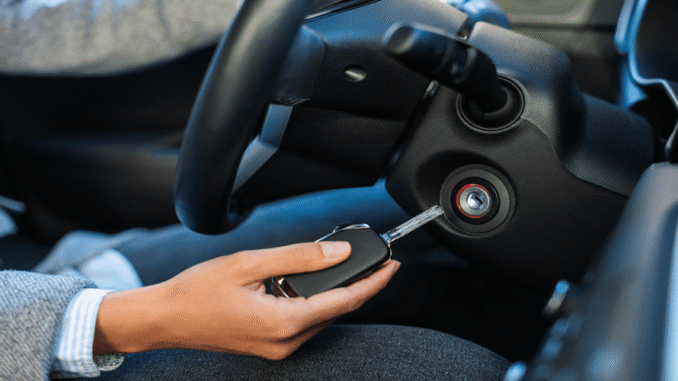
If you turn the key and hear a clicking sound but your car does not start, it usually points to a problem with the electrical system. Many drivers immediately ask, why is my car clicking but not starting, and in most cases, the issue is easier to diagnose than it seems.
The clicking noise is an important clue. It means power is reaching some components, but not enough to fully start the engine. This guide explains what causes a car not to start when it clicks, how to identify the exact problem, and what steps you should take.
What Does the Clicking Sound Mean?
When your car makes a clicking sound:
- The battery is sending some power
- The starter is trying to engage
- But the engine is not turning over properly
There are two common types of clicking:
- Single click: Often a starter-related issue
- Rapid clicking: Usually a weak or dead battery
Understanding this difference helps narrow down why would my car not start in this situation.
Quick Diagnosis Table
| Symptom | Likely Cause | What to Do |
|---|---|---|
| Rapid clicking | Weak battery | Jump start or replace battery |
| Single loud click | Faulty starter | Inspect starter motor |
| Clicking with dim lights | Battery issue | Recharge battery |
| Clicking after sitting | Battery drain | Test battery health |
| Clicking in cold weather | Low battery power | Warm or replace battery |
Battery Problems (Most Common Cause)
In most cases, a clicking sound means the battery does not have enough power to start the engine.
Weak or Dead Battery
A battery can lose charge over time or suddenly fail.
Symptoms:
- Rapid clicking noise
- Dashboard lights are dim or off
- Engine does not crank
Fix:
- Jump-start the car
- Replace the battery if it is old
Corroded Battery Terminals
Corrosion can block the flow of electricity.
Symptoms:
- Clicking sound
- Intermittent starting issues
Fix:
- Clean the terminals
- Tighten the connections
Battery Drain
Sometimes the battery is drained by leaving lights on or due to an electrical fault.
Symptoms:
- Car worked fine earlier
- Suddenly clicking but not starting
Fix:
- Recharge the battery
- Check for devices draining power
Starter Motor Issues
If the battery is fine, the next likely cause is the starter system.
Faulty Starter Motor
The starter motor turns the engine. If it fails, the engine will not crank.
Symptoms:
- Single clicking sound
- No engine movement
Fix:
- Replace the starter motor
Bad Starter Relay or Solenoid
The relay sends power to the starter. If it fails, the starter will not engage properly.
Symptoms:
- Clicking but no cranking
- Inconsistent starting
Fix:
- Replace the relay or solenoid
Electrical System Problems
Electrical faults can prevent proper power flow.
Loose or Damaged Wiring
Wires carry electricity from the battery to the starter.
Symptoms:
- Clicking sound
- No engine response
Fix:
- Inspect and repair wiring connections
Faulty Ground Connection
A poor ground connection can disrupt the electrical circuit.
Symptoms:
- Weak or inconsistent clicking
- Electrical components behave irregularly
Fix:
- Clean and secure ground connections
Alternator-Related Issues
The alternator charges the battery while the car is running. If it fails, the battery eventually loses power.
Failing Alternator
Symptoms:
- Car previously had dim lights
- Battery repeatedly dies
- Clicking sound when trying to start
Fix:
- Replace the alternator
This also answers a common question: can a bad alternator cause a car not to start. Yes, indirectly, by draining the battery.
Cold Weather Effects
Cold temperatures can make starting problems worse.
Reduced Battery Performance
Cold weather reduces battery efficiency.
Symptoms:
- Rapid clicking
- Car not starting in cold weather
Fix:
- Warm the battery
- Use a fully charged battery
Thickened Engine Oil
Cold oil increases resistance in the engine.
Symptoms:
- Struggling to start
- Clicking with slow response
Fix:
- Use oil suitable for colder climates
Other Possible Causes
Seized or Locked Engine
In rare cases, the engine itself may not be able to turn.
Symptoms:
- Clicking sound
- No engine movement at all
Fix:
- Professional inspection required
Security System or Key Issue
Modern vehicles may block starting if the key is not recognized.
Symptoms:
- Clicking but no start
- Security light on dashboard
Fix:
- Try another key
- Reprogram the key
Common Situations Explained
Car Clicking But Not Starting After Sitting
If your car has been unused:
- Battery may have discharged
- Electrical systems may have drained power
Car Clicking But Not Starting in Cold Weather
Cold conditions often lead to:
- Weak battery
- Reduced electrical efficiency
Car Clicking But Not Starting Suddenly
Sudden issues are often caused by:
- Battery failure
- Starter malfunction
- Loose connection
What to Check First
If your car is clicking but not starting, follow this order:
- Check battery charge
- Inspect battery terminals
- Try a jump start
- Listen to the type of click
- Check lights and electrical systems
This process helps quickly identify what causes a car not to start in this scenario.
FAQs
Why is my car clicking but not starting?
It is usually due to a weak battery or a problem with the starter motor.
What does rapid clicking mean?
Rapid clicking typically indicates a low or dead battery.
What does a single click mean?
A single click often points to a faulty starter motor or relay.
Can a bad alternator cause clicking?
Yes, it can drain the battery, leading to clicking when starting.
Why is my car not starting in cold weather?
Cold weather reduces battery power and makes starting more difficult.
Is this problem serious?
In most cases, it is not serious and can be fixed by addressing battery or starter issues.
Conclusion
If your car is clicking but not starting, the problem is usually related to the battery or starter system. The clicking sound itself is a useful clue that helps narrow down the issue quickly.
Start with the battery, since it is the most common cause. Then move on to the starter and electrical connections if needed. A simple and structured approach will help you identify the issue without unnecessary repairs.
Leave a Reply